logo
Mesaj gönder
Shenzhen Ofeixin Technology Co., Ltd
Hakkımızda
Profesyonel ve Güvenilir Ortağınız.
QOGRISYS müşterilere eksiksiz IoT bağlantı çözümleri sunmaya profesyonel olarak kendini adamıştır.Şirket, iletişim endüstrisine odaklanmaktadır.Yılların sektör pazarı ve müşteri hizmetleri deneyiminden sonra, aşırı teknik zorluklarla yüzleşme cesaretine sahiptir ve müşterilerin zorlukları çözmelerine yardımcı olur.Şirket, geniş bant kısa menzilli kablosuz bağlantıdan, geniş alan ağı hücresel iletişime ve derin dikey entegrasyon endüstrisine kadar yüksek kaliteli destekleyici kaynaklara sahiptir ...
Daha Fazla Bilgi

0

Kurulduğu Yıl

0

Milyon+
Çalışanlar

0

Milyon+
Müşterilere Hizmet

0

Milyon+
Yıllık Satış
Çin Shenzhen Ofeixin Technology Co., Ltd Yüksek kalite
Güvenilirlik mührü, kredi kontrolü, RoSH ve tedarikçi yeteneği değerlendirmesi. Şirketin sıkı bir kalite kontrol sistemi ve profesyonel test laboratuvarı var.
Çin Shenzhen Ofeixin Technology Co., Ltd GELİŞİM
İç profesyonel tasarım ekibi ve gelişmiş makine atölyesi. İhtiyacınız olan ürünleri geliştirmek için işbirliği yapabiliriz.
Çin Shenzhen Ofeixin Technology Co., Ltd Üretim
Gelişmiş otomatik makineler, katı bir süreç kontrol sistemi. İhtiyacınızın ötesinde tüm elektrik terminallerini üretebiliriz.
Çin Shenzhen Ofeixin Technology Co., Ltd % 100 Hizmet
Toplu ve özel küçük ambalajlar, FOB, CIF, DDU ve DDP. Tüm endişeleriniz için en iyi çözümü bulmanıza yardım edelim.

Kalite WiFi7 Modülü & WiFi HaLow Modülü Üretici

Gereksinimlerinizi Daha İyi Karşılayan Ürünleri Bulun.
Vakalar ve Haberler
En Son Sıcak Noktalar.
Bu yüksek teknoloji modülü O9201SB ev eğlencesinde devrim yaratacak.
Gece geç ve en sevdiğin şovun içindeyken birden ekran bir slayt şovuna dönüşüyor.Bu sinir bozucu ağ sorunları akıllı ev deneyiminizi bozuyor mu?Merak etme!Qogrisys **Wi-Fi 6 + BT5.4** ile donatılmış en son modülü geliştirdi- Evet.O9201SB¢ki sessizce set-top kutusu endüstrisinde benzersiz bir "deneyim yükseltmesi" ile devrim yaratıyor! 1Ev Eğlencesinin Ağrı Noktaları: Set-Top Kutunuz Gerçekten "Akıllı" Mı? 4K / 8K ultra yüksek çözünürlüklü videoların, bulut oyunlarının ve akıllı ev cihazlarının yükselişiyle, ev ağları muazzam bir baskı altındadır: "Bir Ağ, Çoklu Aygıtlar" Gecikmeye Neden Olur**: TV, telefon, tablet ve akıllı hoparlörler çevrimiçi olduğunda, Wi-Fi 4/5 sadece takip edemiyor!   Yüksek çözünürlüklü videolar "Mosaik" e dönüşür**: 8K video saniyede 100Mbps'den fazla bant genişliği gerektirir ve geleneksel modüller sunmak için mücadele eder.   Temel Çiplerin Yüksek Maliyetleri**: Özelleştirme karmaşık ve pahalıdır, bu da üreticileri hayal kırıklığına uğratır.   2Tanıtım.O9201SB: Wi-Fi 6 + BT5.4 "Yumuşak" ı yeniden tanımlıyor 1Hız artışı: Anlık 8K Video Akışı Çift bantlı eşzamanlı teknoloji**: Dual-Band Simultaneous Technology: 2.4GHz istikrarlı duvar penetrasyonu için, 5GHz alev gibi hızlı hızlar için, 2T2R oranları 1200Mbps'ye kadar. 8K videolar anında yüklenir,İlerleme çubuğunu sürüklerken sıfır tamponlama! MU-MIMO + OFDMA**: Çoklu cihazlar bant genişliği için rekabet etmeden aynı anda bağlanabilir. 2Bluetooth 5.4: Yeni Akıllı Olasılıkların Açılması Anlık Yanıtlı Bluetooth Uzaktan Denetim**: Daha hassas ses kontrolü ve sorunsuz işletimden yararlanın. Sıfır Gecikme ile Dış Hoparlörleri ve Oyun Denetleyicilerini Bağlayın**: Tamamen sürükleyici bir oyun ve eğlence deneyimine dalın.   3Liderlik Teknolojisi + Yüksek Seviye Hizmet: Üreticiler ve Kullanıcılar İçin Bir Kazanç 1Kendine güvenilir ve güvenli, tam güvenlik sağlar. Çipler, istikrar ve güvenliği sağlayan uluslararası teknik standartlara uygun. Veri şifreleme + yerelleştirilmiş sunucular kapsamlı gizlilik koruması sağlar. 2Esnek özelleştirme, hızlı yanıt Profesyonel bir Ar-Ge ekibi "derin uyarlama"yı destekliyor, tasarımdan seri üretime kadar özelleştirmeyi sadece 30 günde tamamlıyor. Optimize edilmiş bir tedarik zinciri maliyetleri %20 azaltır ve teslimat döngülerini %50 kısaltır.   4Gelecek buradadır: Akıllı Evlere "Altın Kapı"yı ele geçirmek Kullanıcılar için,O9201SBüreticiler için sorunsuz ve sorunsuz bir deneyim yükseltme sunar.Bu, maliyetleri düşürmek ve verimliliği artırmak için güçlü bir araçtır.Bu modülle donatılmış set-top kutuları sadece ev eğlencesinin merkezi olmakla kalmayıp akıllı ev aletleriyle de sorunsuz bir şekilde entegre olabilir.Bu da onları milyar dolarlık akıllı ev pazarının ana kapısını ele geçirmek için konumlandırıyor!     "Kullanılabilir"den "mükemmel"e ve teknolojik bağımlılıktan teknolojik liderliğe,O9201SBtarafından geliştirilen modülQogrisys Üst katmanlı performans ve yüksek seviyeli hizmeti ile set-top box endüstrisinin kurallarını yeniden yazıyor.O9201SBdeğil.Sadece bir modülü seçmekle kalmaz, geleceğe yönelik bir "deneyim devrimi" seçersiniz.  
O9201UB Projector Endüstrisinin Mevcut Durumu: Kablosuz Bağlantı Ağrı Noktaları Acil Bir Atılım Gerektirir
Akıllı projektörler günümüzde giderek yaygınlaştıkça, kullanıcıların görüntü kalitesi ve işlevselliği talepleri sürekli artmaktadır.Kablosuz bağlantının istikrarı ve hızı, kullanıcı deneyiminin yükseltilmesini engelleyen engeller haline geldi.: · 4K / 8K İçerik İletişim Kekemelik: Yüksek çözünürlüklü videolar son derece yüksek bant genişliği gerektirir ve geleneksel Wi-Fi modülleri sıklıkla karmaşık ortamlarda gecikmeler ve tamponlamalardan muzdarip olur. · Çoklu Cihazlar Arasındaki Şiddetli Karışıklık: Projectorlar akıllı telefonlar, tabletler ve hoparlörler gibi birden fazla cihazla aynı anda bağlandığında, ağ tıkanıklığı sıklıkla sinyal kesintisine neden olur. · Zayıf Bluetooth Periferal Deneyimi: Eski protokoller yüksek gecikme ve zayıf müdahale karşıtı yeteneklerden muzdarip, bu da kablosuz hoparlörler, oyun denetleyicileri ve diğer cihazlar için kararsız bağlantılara neden olur. · Elektrik tüketimi ve ısı dağılımı arasındaki çatışma: Yüksek hızlı iletim yüksek güç tüketimi ile birlikte gelir, cihaz pil ömrünü etkiler ve hatta ısı dağılım sorunlarına neden olur.       Bu sorunlar markanızın güvenilirliğini zayıflatıyor. Ben.O9201UBModül: Projectorlar İçin Tasarlanmış "Kablosuz Kalp" QOGRISYS12 yıldır kablosuz iletişime yoğun şekilde katılmıştır.Wi-Fi 6 + Bluetooth 5.4 çift mod modülüO9201UBProjection senaryolarında kablosuz deneyimi yeniden yapılandırmak için dört temel avantajla tasarlanmıştır: 1.Wi-Fi 6 Ultra Hızlı İletişim, 4K/8K Sıkıcı ve Kesintisiz Sonsuzluk · Çift bantlı eşzamanlı, akıllı geçiş: 2.4GHz güçlü duvar geçiş yetenekleri sunar. Hız 1200Mbps'e kadar olabilirken 5GHz, 2T2R DBAC ve 1T1R DBDC modunu destekler.İnternet erişimi ve ekran dökümü için aynı anda farklı frekans bantlarının kullanılmasına izin veren, veda et. Kekemelik. · MU-MIMO + OFDMA Teknolojisi: Aynı anda birden fazla cihaz arasında yüksek hızlı iletimi destekler, birden fazla kullanıcı ağ paylaştığında bile istikrarlı ve pürüzsüz projeksiyon sağlar. · Işın şekillendirme teknolojisi: Cihazların konumlarını doğru bir şekilde belirler, sinyal gücünü dinamik olarak arttırır ve projection ölü bölgelerini ortadan kaldırır, oturma odasında veya konferansta tam sinyal kapsamını sağlar   ② Bluetooth 5.4 + Düşük Gecikme, "Sıfır Algılama" Ses-Video Senkronizasyonu · 2 Mbps Yüksek Hızlı Bluetooth: Kablosuz hoparlörler/kulaklıklar28ms(sektör ortalaması: 50ms), "ses-video senkronizasyonu" ile konser benzeri ses efektleri sunar. · AFH Müdahale Karşıtı Teknoloji: Otomatik olarak tıkanık 2.4G kanallarından kaçınır, birden fazla cihazın (uzaktan kumanda + mikrofon + hoparlörler) müdahale olmadan birlikte var olmasına izin verir ve ses kontrolü için "anlık yanıt" sağlar. · HCI Teknolojisi: Kernel sürümleri arasında uyumlu bir ara rezerv sağlar; USB arayüzü ayrıca Bluetooth hoparlörlerine bağlanabilir, üst düzey ses efektleri sunar, hata ayıklama süresini tasarruf eder,ve PCM arayüzünde pin kullanımını azaltmak   ③ Kompakt boyut + Düşük güç tüketimi, daha fazla tasarım özgürlüğü · Kompakt Boyut: Ultra küçük boyut 15×13×2.3mm, ultra ince projektör tasarımları için uygundur, iç alan tasarrufu yapar. · Akıllı Güç Yönetimi: Wi-Fi + Bluetooth işbirlikçi güç tüketimi %20 azaldı, yerleşik batarya projeksiyonun çalışma süresini 1,5 saat uzattı, açık hava kampında kesintisiz olmasını sağladı   4.Esnek Adapte, Kolay Entegre · USB 2.0 Arayüzü: Üreticiler için geliştirme maliyetlerini düşüren ana akım projektör modelleriyle uyumludur. · Çoklu Sertifikalar: Veri güvenliğini ve uyumluluğunu sağlayan WPA3 şifreleme, BLE Audio ve diğer standartları destekler. - Hayır.II."Kablosuz Projeksiyon"un Yeni Mavi Okyanusunu Şimdi Kullanın! Küresel akıllı projektör piyasası 2025 yılına kadar 80 milyar doları aştı ve kablosuz deneyim kullanıcılar için temel bir karar alma faktörü haline geldi.O9201UBSadece "görme araçları" değil aynı zamandaEv eğlence merkezleri, iş işbirliği merkezleri ve akıllı ev geçitleri. Ev Eğlence Senaryoları: Kablosuz oyun ekranı dökümü: 4K @ 60fps düşük gecikme iletimini destekler, sürükleyici Bluetooth hoparlörleri ile eşleştirilmiştir.Akıllı ev entegrasyonu: Ekranları / ışıkları kontrol etmek için doğrudan Wi-Fi bağlantısı, sürükleyici bir tiyatro sistemi oluşturur. İş Ofisi Senaryoları: Çoklu cihazlar arasında kablosuz ekran paylaşımı:Birden fazla terminaldeki gösterileri desteklemek, toplantı verimliliğini %50 arttırır. Uzaktan işbirliğinin optimize edilmesi: QoS akıllı bant genişliği tahsis edilmesi, video konferanslarının istikrarlı olmasını sağlar Eğitim Ssenaryoları: Çevrimiçi sınıf güvencesi: Karışıklık karşıtı tasarım, 4K ders programının pürüzsüz bir şekilde gösterilmesini sağlar. Etkileşimli öğretim desteği: Bluetooth mikrofon gecikme süresi < 30ms, sıfır gecikme öğretmen-öğrenci etkileşimini sağlar. III..SeçimO9201UBSadece bir modülden daha fazlasını elde edeceğiniz anlamına geliyor. ▶Gelişmiş Teknoloji, Performans Benchmark:IEEE 802.11ax ve Bluetooth 5.4 protokollerine dayanan performans, geleneksel modülleri tamamen aşar. ▶ Hizmet güvencesi:7x24 teknik destek, "modül + sürücü + senaryo optimizasyonu" kapsamlı hizmetleri sunar. ▶ Ekosistem İşbirliği, Genişleyen Senaryolar:Projectorların ötesinde, akıllı ev cihazlarıyla (örn. Ekranlar), projektörlerin akıllı kontrol merkezlerine yükseltilmesine yardımcı oluyor. Sonuç: Kablosuz projeksiyonun geleceğini belirleyen sizsiniz! BuO9201UBModül, "hızlı, istikrarlı ve verimli" temel avantajlarıyla, projektör endüstrisi için nihai kablosuz bağlantı çözümü sağlar.İster ev sinemasının en iyi deneyimi olsun, ister etkin iş işbirliği., kolayca ele alınabilir.QOGRISYS Sizinle işbirliği yapmaya hazır, teknolojik yenilikler yoluyla endüstrinin dönüşümünü hızlandıracak ve her projektörü "kablosuz özgürlüğe" bir kapı haline getirecek!
Fotovoltaik Yeni Enerji: PLC Modülleri için En Kesin Artış Pazarı
2026'nin ilk yarısında Çin'in yeni bağlanan fotovoltaik (PV) kapasitesi 71,77 milyon kilovolta ulaştı, bunun 42,22 milyon kilovolta'sı, yani yaklaşık %58,8'i dağıtılmış PV'den oluştu. Küresel olarak, IIM Information tarafından yayınlanan "Küresel ve Çin Dağıtılmış PV Sistemi Pazar Derinlemesine Araştırma ve Danışmanlık Analiz Raporu (2026)"a göre, 2026'nın ilk yarısı itibarıyla, küresel kümülatif dağıtılmış PV kurulu kapasitesi 480 GW'ı aşmış olup, Asya-Pasifik bölgesi artışın %55'inden fazlasını sağlamıştır. 2026 sonuna kadar küresel yıllık yeni kurulu kapasitenin 98 GW ile 115 GW arasında bir değere ulaşması bekleniyor, bu da yıllık bazda yaklaşık %12'lik bir artış anlamına geliyor. Dağıtılmış fotovoltaiklerin büyük ölçekli üretimi, PLC (Power Line Carrier Communication - Güç Hattı İletişimi) modüllerini belirli bir artış pazarına yönlendiriyor. Bu kesinlik, üç faktörün birleşiminden kaynaklanıyor: zorunlu politika desteği, teknolojik yolun benzersizliği ve ticari doğrulamanın tamamlanması. I. Politika Odaklı: Bileşen Düzeyinde Güvenli Kapatma Küresel Bir Zorunlu Gereklilik Haline Geliyor PLC modüllerinin fotovoltaik alanındaki temel uygulama senaryoları, modül düzeyinde hızlı kapatma ve modül düzeyinde izlemedir. Bu iki işlev, büyük küresel pazarlardaki zorunlu standartlar tarafından doğrudan yönlendirilmektedir. Kuzey Amerika pazarında, NEC 2026, Madde 690.12'deki hızlı kapatma gereksinimlerini daha da revize etti. SurgePV'nin NEC 2026 Hızlı Kapatma Uyumluluk Kılavuzuna göre, NEC'nin 2026 sürümü mevcut voltaj sınırı hedeflerini koruyor: dizi sınırı dışındaki iletkenler 30 saniye içinde 30V'un altına düşürülmeli ve dizi sınırı içindeki iletkenler 30 saniye içinde 80V'un altına düşürülmeli veya sertifikalı PVHCS ekipmanı kullanılmalıdır. Bu, her fotovoltaik modülün PLC iletişim yeteneğine sahip bir kapatma cihazıyla donatılması gerektiği anlamına gelir. Avrupa pazarında, EN50065-1 standardı, düşük voltajlı güç hatlarında 3kHz ila 526.5kHz frekans aralığında geçerli olan iletişim ekipmanlarını açıkça belirtmektedir. Tipik uygulamaları arasında fotovoltaik güç üretim sistemlerinde fotovoltaik paneller ve invertörler arasındaki DC bara iletişimi yer alır. Çin pazarında, yeni ulusal standart GB/T 34932-2025, 1 Nisan 2026'da resmi olarak yürürlüğe girdi. Dağıtım için "dört gereksinim" kapsamında, yeni şebekeye bağlı ekipmanların standart arayüzleri desteklemesini, en az beş dakikada bir veri toplamasını ve kimlik doğrulama, veri şifreleme ve erişim kontrolünü zorunlu kılmasını gerektirir. 2026'da, AB karbon tarifesi ayarlama mekanizması zorunlu uyumluluk aşamasına giriyor. Geleneksel invertör düzeyinde izleme, bileşen düzeyinde karbon ayak izi takibi için doğruluk gereksinimlerini karşılayamaz, bu da doğru karbon emisyon verileri elde etmek için bileşen düzeyinde güç elektroniği ve akıllı izlemeyi kritik bir teknolojik yol haline getirir. Temel politika değişikliği, PLC iletişim modüllerinin fotovoltaik sistemlerdeki "isteğe bağlı aksesuarlar"dan "uyumluluk zorunlulukları"na dönüşmesidir.İster Kuzey Amerika'nın hızlı kapatması, ister Avrupa'nın modül düzeyinde izlemesi, isterse Çin'in "dört yeteneği" olsun, hepsi modül düzeyindeki cihazlar arasında güvenilir veri iletişim bağlantıları gerektirir. II. Teknoloji Uyarlaması: Fotovoltaik Uygulamalarda PLC'ler Neden Vazgeçilmezdir Bir fotovoltaik sistemin fiziksel yapısı, iletişim şemasının seçimini belirler. Her fotovoltaik panel bir DC güç hattına bağlıdır ve her invertör bir AC güç hattı aracılığıyla şebekeye bağlıdır. PLC iletişimi, veri iletimi için mevcut güç hatlarını tamamen yeniden kullanabilir, ek iletişim kablolarına veya kablosuz erişim noktalarına olan ihtiyacı ortadan kaldırır. Metal çatılar ve karmaşık elektromanyetik ortamlar, kablosuz iletişimin güvenilirliği için önemli zorluklar oluştururken, PLC'ler fiziksel ortam olarak güç hatlarını kullanarak güçlü parazit önleme yeteneklerine sahiptir. RS485 veri yolu çözümleri güvenilir iletişim sunsa da, fotovoltaik dizi içinde ek iletişim kablolaması gerektirir, bu da kurulum maliyetlerini, inşaat süresini ve potansiyel arıza noktalarını artırır.Fotovoltaik modül düzeyinde kapatma ve izleme senaryolarında, PLC'lerin neredeyse hiç eşdeğeri alternatifi yoktur. III. Ticari Doğrulama: Teknolojinin Tanıtımından Toplu Sevkiyata Fotovoltaik PLC modül pazarı, "teknoloji doğrulamasından" "toplu sevkiyata" kritik bir sıçrama tamamladı." PLC çipleri, fotovoltaik modül düzeyinde güç elektroniği alanında seri üretime ulaştı , ve PLC modülleri entegre edilmiş modül düzeyinde kapatma cihazları ve güç optimize edicileri, Güneydoğu Asya gibi denizaşırı pazarlara toplu olarak ihraç ediliyor ve konut ve ticari dağıtılmış fotovoltaik senaryolarında yaygın olarak kullanılıyor. Bu büyük ölçekli pazar başarısı, PLC iletişim teknolojisinin fotovoltaik DC tarafının karmaşık elektromanyetik ortamında uzun süreli operasyonel doğrulama geçirdiğini ve yüksek düzeyde çevrimiçi iletişim oranı sağladığını göstermektedir. Pazar perspektifinden bakıldığında, her GW fotovoltaik güç yaklaşık 2 milyon fotovoltaik panel gerektirir. Her panel bir kapatma çipi ile donatılmışsa, küresel yıllık talep 400 milyondan fazla paneldir. Şu anda, Kuzey Amerika ve Avrupa, dağıtılmış fotovoltaik projelerin modül düzeyinde hızlı kapatma yeteneklerine sahip olmasını zorunlu kılmıştır.Çin benzer zorunlu standartlar getirirse, bu daha da büyük bir artış talebi getirecektir. IV. Fotovoltaik Senaryolar Çözümü Qogrisys PLC Modülleri Qogrisys, PLC modülü alanında net bir ürün portföyü oluşturmuştur ve hem S130N-ISI hem de 3121N-H modülleri fotovoltaik iletişim senaryoları için önerilen çözümler olarak resmi olarak listelenmiştir. S130N-ISI: Kapatma ve optimize edici için kompakt bir çözüm S130N-ISI, Leadcore VC6330 çip tasarımına dayanmaktadır, 32 bit ARM Cortex-M3 MCU ve 32 bit DSP, yerleşik Flash, 1MB SRAM ve zengin iletişim arayüzlerini entegre eder. Modül, yalnızca 20.6×12.6×2.5mm boyutlarında bir LCC paketi kullanır ve entegre bir çip içi tel sürücüsü, düşük güç tüketimi, güçlü gürültü bağışıklığı ve -40°C ila +85°C çalışma sıcaklığı aralığına sahiptir. Bu modül, Çin SGCC Q/GDW 11612 ve IEEE 1901.1 çift iletişim protokollerini destekler ve BPSK, QPSK ve 16QAM modülasyonunu destekler. S130N-ISI'nin ultra küçük boyutu ve düşük güç tüketimi, alan kısıtlı fotovoltaik (PV) kapatma cihazlarına veya güç optimize edicilerine entegrasyon için uygun olmasını sağlar.Bu kapatma cihazları PV panellerinden güç alır ve güç hattındaki PLC sinyallerini mikrowatt düzeyinde güç tüketimiyle sürekli olarak izlemesi gerekir; S130N-ISI'nin düşük güç tasarımı bu gereksinime uygundur. 3121N-H: Bileşen düzeyinde izleme için çoklu düğüm ağ çözümü 3121N-H, 0.5-3.7MHz ve 2.5-5.7MHz frekans bantlarında çalışan HiSilicon PS0211 çipi temel alınarak geliştirilmiştir. Protokol, IEEE 1901.1 standardının bir alt kümesine dayanmaktadır, 80Kbps uygulama katmanı hızına sahiptir ve 200MHz ARM Cortex-M3 işlemci ile donatılmıştır.Tek bir CCO, 200 adede kadar STA düğümünü destekler, dinamik yönlendirme ve çok yollu otomatik adreslemeyi destekler ve tipik bir 200 düğümlü Katman 2 ağı 10 saniye içinde oluşturulabilir.3121N-H'nin çoklu düğüm ağ yeteneği, dağıtılmış fotovoltaik sistemlerde birden fazla bileşen ve cihazın birleşik erişim gereksinimlerine uyum sağlar. Bileşen düzeyinde izleme çözümlerinde, 3121N-H, bileşen bağlantı kutusunda bir PLC izleme modülü olarak hizmet verebilir, voltaj, akım ve sıcaklık verilerini gerçek zamanlı olarak toplayabilir ve DC güç hatları aracılığıyla diziye bağlayabilir. Veri yolu katmanında, bu modül geleneksel RS485 veri yolunu değiştirebilir, invertörler, veri toplama birimleri ve bulut platformlarıyla kablosuz çift yönlü iletişimi etkinleştirebilir.Sonuç Qogrisys, "yeni enerjiyi" bağımsız bir uygulama alanı olarak listelemiştir ve ürünleri açıkça fotovoltaik panelleri, fotovoltaik invertörleri, enerji depolamayı ve şarj istasyonlarını kapsamaktadır. Akıllı sokak lambaları, akıllı otoparklar ve şarj istasyonları gibi senaryolarda, Qogrisys'in 3121N-H ve S130N-ISI modülleri, mevcut güç hatları aracılığıyla cihazlar arasında güvenilir iletişim sağlar, her terminal için ayrı iletişim hatları döşeme ihtiyacını ortadan kaldırır. Şu anda, Qogrisys Güneydoğu Asya'daki gelişmekte olan pazarları hedeflemektedir.    

2026

09/16

Wi-Fi 7 Modules: From High-Speed Pipeline to Intelligent Node – Industrial-Grade Sensory Integration
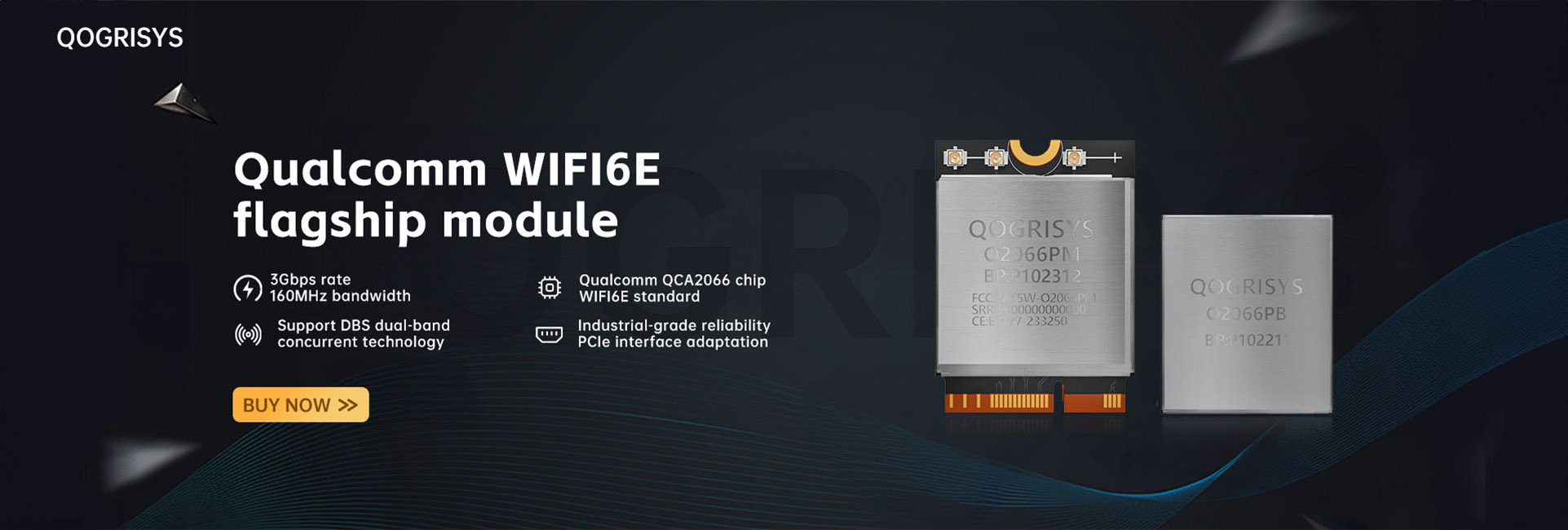
9th to 11th, 2026 , the 27th China International Optoelectronic Exposition (CIOE), in conjunction with the IICIE International Integrated Circuit Innovation Expo and Elexcon Shenzhen International Electronics Exhibition & Embedded Systems Exhibition, will be held concurrently at the Shenzhen World Exhibition & Convention Center. The three exhibitions will be held together, covering a total exhibition area of 320,000 square meters, bringing together more than 5,000 exhibitors and attracting over 240,000 professional visitors . This is a grand industry event covering the entire optoelectronics, semiconductor, and electronics industry chain.   For the Wi-Fi module industry, this exhibition sent a clear signal: the value proposition of Wi-Fi 7 modules is undergoing a fundamental shift—from providing "high-speed connectivity channels" to becoming "industrial-grade intelligent nodes" that integrate sensing, positioning, and edge intelligence. The Industry Logic Revealed by the Collaboration of Three Exhibitions: Why "Sensory Integration" Has Become a Must-Answer Question The essence of the three exhibitions working together is a forced "alignment" of the upstream and downstream of the industry chain. In the past, the optoelectronic industry focused on optical chips and devices, the semiconductor industry focused on chip design and advanced packaging, and the electronics industry focused on the development of terminal equipment and embedded systems. The three major industry systems were fragmented, with different technical standards and poor supply and demand matching, forming obvious industry barriers . The rapid popularization of large-scale AI models and supercomputing clusters has changed this landscape. The industry's demand for ultra-high bandwidth, ultra-low power consumption, and ultra-high integration has increased significantly. The previously independent industry boundaries have been completely broken down. Optical engines and switching chips are deeply integrated, and optoelectronic devices are directly embedded inside chip packages, forcing optical design, semiconductor processes, advanced packaging, and electronic systems to develop in a coordinated manner . This trend is particularly evident in the Wi-Fi module industry. Wi-Fi 7 is not only a generational upgrade in communication speed, but also provides a technological foundation for "integrated communication and sensing" due to its introduction of Multi-Link Operation (MLO), 320MHz channels, and fine-grained timing measurement capabilities. The China Academy of Information and Communications Technology (CAICT) explicitly proposed in its research report on 10 Gigabit AI Park Networks that wireless access points should be upgraded to "integrated communication and sensing" anchor points, natively integrating IoT access, environmental perception, and terminal positioning capabilities to break the data silos and protocol fragmentation dilemmas caused by traditional siloed network construction. The competitive logic in the module industry has therefore undergone a qualitative change: connectivity itself is "depreciating," and "intelligent connectivity" that integrates perception and edge intelligence is the new pricing power. The triple capability leap of Wi-Fi 7 modules The "integration" of Wi-Fi 7 modules is not a functional aggregation, but rather a fusion of capabilities at the underlying chip architecture level. Solutions represented by Qualcomm FastConnect C7700 (chip code name QCC2072) integrate three capabilities that previously belonged to different radio frequency domains on a single chip. The first capability: an industrial-grade leap in Wi-Fi 7 communication performance. The QCC2072 supports 320MHz channel bandwidth, 4096-QAM modulation, and 2×2 MU-MIMO, achieving a peak PHY rate of 5.8 Gbps . Its introduced Enhanced Multi-Link Single Radio (eMLSR) technology allows data to be transmitted through other links when interference occurs in a certain frequency band, effectively maintaining high throughput and low latency . This is crucial for deterministic transmission requirements in industrial environments. The second capability: Wi-Fi sensing and high-precision positioning. This chip solution supports IEEE 802.11az Wi-Fi ranging. 802.11az uses Time-of-Flight (ToF) technology to measure the actual distance between the device and the access point, replacing the traditional RSSI fingerprint comparison method, achieving sub-meter positioning accuracy of less than 1 meter. In industrial scenarios, this means that the Wi-Fi module can not only transmit data but also accurately sense the device's location and spatial status. The third capability: Bluetooth 6.0 Channel Sounding and Aux Radio. Bluetooth 6.0 introduces Channel Sounding technology, improving Bluetooth positioning accuracy to sub-meter levels . Simultaneously, this solution is equipped with a dedicated Wi-Fi Aux Radio for background scanning and low-latency listening while the main radio is in sleep mode, balancing power consumption and response speed . The integration of these three capabilities enables a single Wi-Fi 7 module to possess integrated "communication + sensing + positioning" capabilities for the first time. VOXMICRO's AIRETOS C27 industrial-grade module is a typical example of this architecture. It integrates capabilities that were previously belonging to three independent radio frequency domains into a single module package, enabling industrial OEMs to shift their design goals from "adding a radio" to "accomplishing more tasks with a single industrial-grade module" . Market data: The inflection point for the large-scale deployment of Wi-Fi 7 modules has arrived. The global Wi-Fi module market is currently experiencing a period of structural growth. According to market research reports, the global Wi-Fi module market size is projected to reach US$16.82 billion in 2026, a 17.9% increase from US$14.27 billion in 2025. Among these, Wi-Fi 7 modules are rapidly increasing their market share to 17.2%, with projected shipments reaching 234 million units for the year . From a broader perspective, the global Wi-Fi 7 module market was valued at $3.8 billion in 2025 and is projected to reach $22.6 billion by 2034, representing a CAGR of 21.9% . The Wi-Fi Alliance predicts that global shipments of Wi-Fi 7 devices will reach approximately 1.1 billion units in 2026, of which approximately 196 million will be IoT devices. The Industrial Internet of Things (IIoT) is one of the fastest-growing sub-sectors. Global demand for IIoT modules is projected to reach $9.81 billion, with an annual growth rate of 17.8% . The reliability requirements of industrial applications—wide operating temperature range, interference resistance, and deterministic low latency—are driving the accelerated evolution of Wi-Fi 7 modules from consumer to industrial applications. Qogrisys early strategic moves: from chip solutions to module productization O2072PM and O2072PB, launched simultaneously by O2072 with the QCC2072 chip, is not simply an expansion of the product line, but rather an engineering choice for different deployment scenarios. The O2072PM uses an M.2 Key E standard interface (2230 specification), a 2T2R dual-antenna design, and supports both Wi-Fi and Bluetooth operation. This module incorporates all the functions of the QCC2072: the Wi-Fi portion covers the full IEEE 802.11a/b/g/n/ac/ax/be standards, supporting tri-band 2.4 GHz/5 GHz/6 GHz, with a channel bandwidth of up to 40 MHz at 2.4 GHz, 160 MHz at 5 GHz, and 320 MHz at 6 GHz. The Bluetooth portion is compatible with Bluetooth 6.0, supporting LE Audio, 2 Mbps BLE, and high-precision distance measurement (HADM channel sounding) . In terms of driver adaptation, the O2072PM has been adapted and is running stably on Intel x86 platforms with kernels 5.15.24+, 6.1.99, and 6.12.0. The O2072PB uses a 13×15mm surface mount package, targeting space-constrained embedded scenarios. Its core functions are identical to the O2072PM, also supporting a peak data rate of 5.8 Gbps, a 320MHz channel, 4K QAM modulation, Bluetooth 6.0 channel detection, and 802.11az Wi-Fi ranging . The O2072PB explicitly supports various operating modes including AP/AP+STA/P2P/Monitor, providing a PCIe interface for Wi-Fi and a UART/PCM interface for Bluetooth, supporting Class 1 and Class 2 power level transmission without the need for an external power amplifier . The differentiated positioning of the two modules reflects a profound change in the module industry: as chip capabilities become highly integrated, the core competitiveness of module manufacturers is shifting from "how much throughput can be achieved" to "whether the full capabilities of the chip can be efficiently released under specific physical constraints." The M.2 interface module targets industrial PCs, gateways, and edge computing devices that require standard slots and replaceable designs; the surface-mount module targets embedded terminals with extremely limited PCB space, requiring module manufacturers to possess more refined engineering capabilities in RF design, antenna matching, and thermal management. Validation in industrial scenarios: from technical feasibility to deployment Wi-Fi 7 sensing technology is being practically validated in industrial scenarios. In the mining sector, Shanxi Coal International's Hequ Open-pit Coal Mine's pilot project of a 10-gigabit optical network based on 50G-PON + Wi-Fi 7 has passed the Ministry of Industry and Information Technology's acceptance test. Fifty-seven Wi-Fi 7 gateways have been deployed in the core area, allowing dispatchers to remotely control unmanned mining trucks several kilometers away via Wi-Fi 7 tablets. In the field of smart buildings, the Longgang International Art Center uses Wi-Fi 7 + CSI sensing technology to accurately detect the presence of people, achieving a reduction of over 15% in venue energy consumption and a 30% improvement in operation and maintenance efficiency . These cases share a common characteristic: Wi-Fi networks are no longer just for data transmission, but have also become the infrastructure for environmental sensing and spatial positioning. For the module industry, this means that downstream customers' needs are upgrading from "providing stable wireless connectivity" to "providing integrated capabilities that converge connectivity, sensing, and positioning." Conclusion The industry landscape revealed by the three exhibitions is clear and definite: the demand for AI computing power is driving the deep integration of the optoelectronics, semiconductor, and embedded electronics industries, and Wi-Fi 7 modules are at the intersection of this integration. The shift from "high-speed connectivity" to "integrated sensing" is not just a product iteration, but a systemic reconstruction of the value proposition of the module industry. For Wi-Fi module manufacturers, their ability to establish competitive advantages in chip solution integration, cross-platform adaptation, and industrial-grade reliability will determine their position in the new industry cycle. However, the real test lies in whether module manufacturers can continue to efficiently translate chip capabilities into deployable industrial-grade products as "integrated sensing" transitions from a technological trend to an industry standard.  

2026

09/14

Small Size, Low Power, High Stability: The Ultimate IoT Module Solution
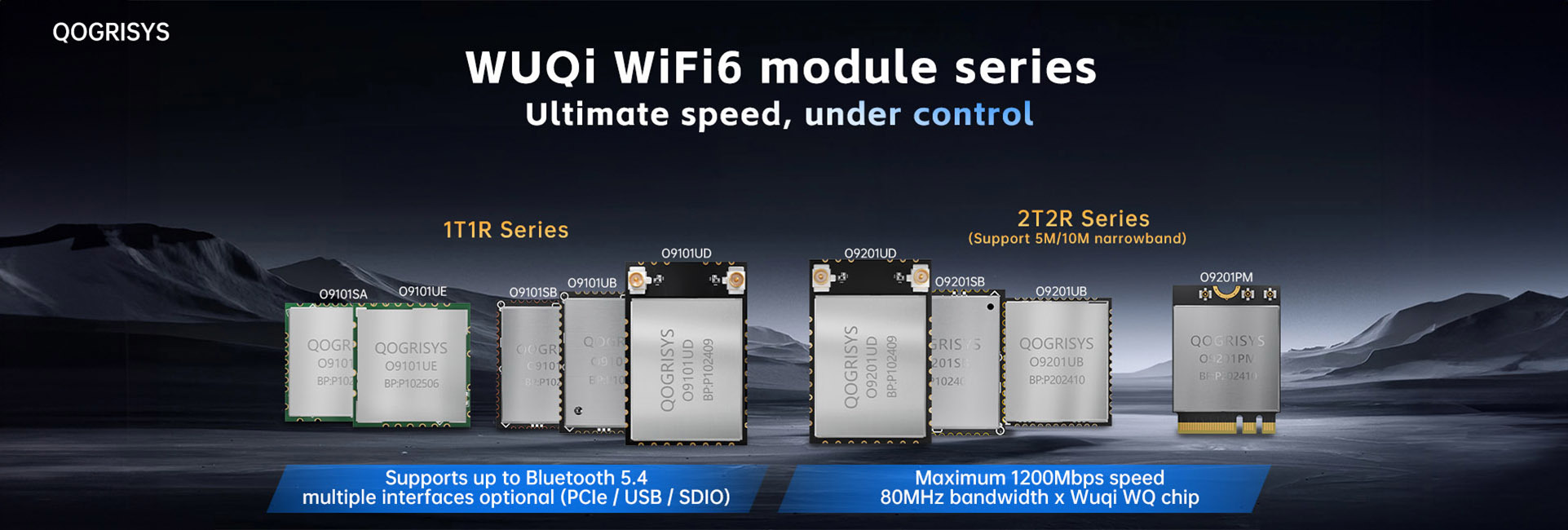
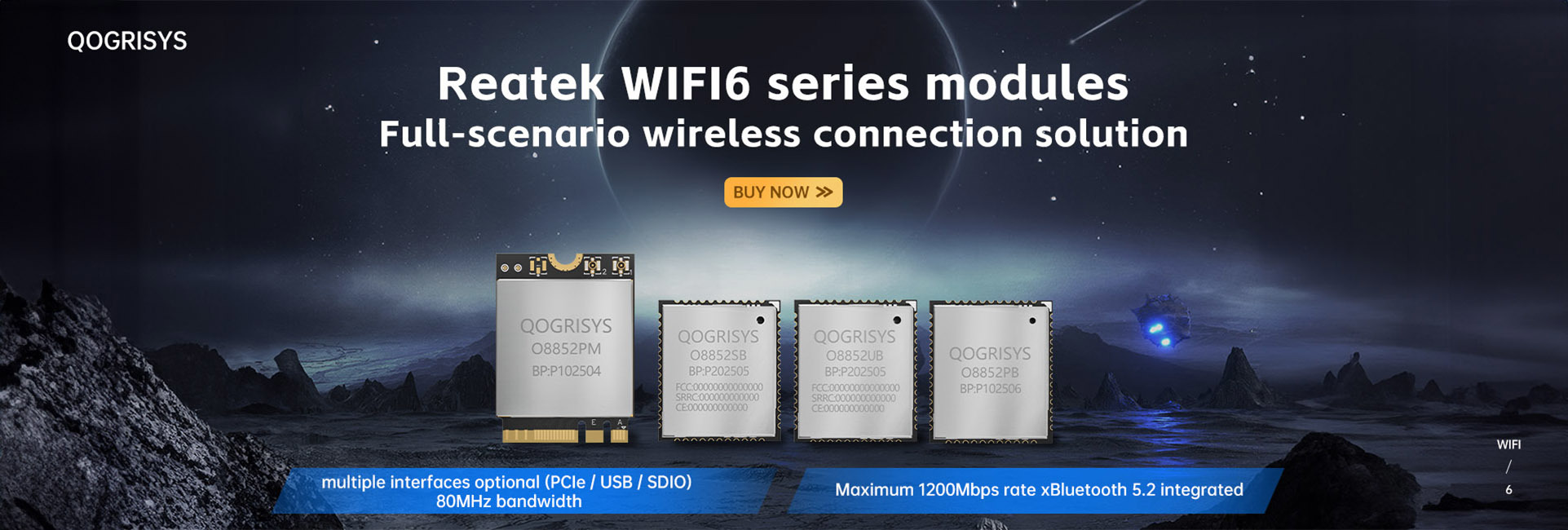
I. The "Impossible Triangle" of IoT Terminals With the rapid iteration of IoT terminals, more and more devices are moving towards miniaturization and battery power, while products are facing design challenges such as limited PCB space, insufficient battery life, and unstable wireless connectivity . This is not an isolated phenomenon in a particular sub-sector, but rather a systemic challenge facing the entire Internet of Things (IoT) industry. In 2026, global shipments of wireless modules reached 870 million units, with a market size exceeding US$41.2 billion. By 2030, global shipments are projected to climb to 1.52 billion units, with a CAGR of 11.8%, and the market size is expected to reach US$79.8 billion. During the same period, the number of connected IoT devices worldwide is expected to exceed 39 billion. This explosive growth in device numbers is amplifying the challenges of every design dimension into key factors determining product success or failure. Small size, low power consumption, and high stability—these three requirements are forming the "impossible triangle" in IoT terminal design. In traditional solutions, these three often constrain each other: pursuing small size limits antenna performance, pursuing low power consumption sacrifices transmission rate, and pursuing stability increases power consumption and size. Finding a balance among these three has become a core issue for module solution providers. II. Challenge 1: Extremely tight PCB space Industrial driving force of space compression From smart rings and TWS earphones to micro sensors and smart locks, the physical space of terminal devices is being continuously compressed. The micro battery market is projected to grow from $1.59 billion in 2025 to $1.81 billion in 2026, representing a CAGR of 13.5%. This rapid growth in the micro battery market is a direct reflection of the trend towards device miniaturization —the smaller the device, the higher the requirements for battery volume and energy density. One of the most challenging problems faced by hardware engineers is achieving high-density, high-stability electrical connections between the daughterboard and the motherboard under extremely limited overall device thickness and PCB space. As an indispensable radio frequency component in the device, the footprint of the wireless module directly determines the feasibility of the overall device layout. Solution path for miniaturized modules The industry is addressing the spatial challenges from multiple perspectives. The O9101SA module from Qogrisys has compressed its size to 12×12mm , while supporting dual-band Wi-Fi 6 and BLE 5.4 with speeds up to 600Mbps . This size is among the industry-leading levels for Wi-Fi 6 + Bluetooth Combo modules. This extreme size reduction not only allows for more space to be packed in, but also frees up valuable PCB space for other components such as the battery, sensors, and main control chip – the smaller module footprint allows for more storage . Multi-protocol single-chip integration is another key path. Two independent modules, plus their respective peripheral circuits and antenna clearance, occupy a much larger PCB area than a single multi-protocol integrated module. In small-sized products such as smart bulbs and panel switches, this area is the biggest limiting factor. The Wi-Fi/Bluetooth Combo solution fundamentally reduces PCB footprint by integrating the two protocols into a single chip. The area occupied by antennas is also significant. Traditional antenna implementations consume 15%-25% of the total PCB area in mobile devices and IoT applications. The emergence of antenna-in-package (AiP) technology integrates the antenna into the module package, achieving space savings of 40%-60% . Challenge 2: Severely Inadequate Battery Life The Economics of Range Anxiety For battery-powered IoT devices, battery life is not a "nice-to-have" but a "life-or-death" issue. The global IoT battery market was valued at $15.9 billion in 2024 and is projected to grow to $36.88 billion by 2033, representing a CAGR of 9.8%. This continued expansion reflects the rigid demand from end devices for longer battery life. The operational lifespan of battery-powered nodes directly impacts maintenance costs and deployment scalability . The industrial value of low power consumption technology The low-power Wi-Fi module market is projected to reach $4.142 billion in 2025 and $11.79 billion in 2032, representing a CAGR of 16.4%. The BLE module market is expected to grow to $68.27 billion in 2032, with a CAGR of 13.80%. The robust growth of these two segments confirms that low power consumption has become one of the most crucial competitive dimensions in the module industry. IV. Challenge 3: Unstable wireless connection Crowded 2.4GHz and limited antennas The root cause of unstable wireless connections lies in two structural contradictions. The first problem is frequency congestion. The 2.4GHz ISM band is shared by multiple protocols such as Wi-Fi, Bluetooth, Zigbee, and Thread, resulting in severe co-channel interference. In high-density deployment scenarios such as smart homes and offices, signal conflicts and data rate degradation are commonplace. The second contradiction is the limitation of antenna performance. Device miniaturization means that the available space for the antenna is compressed, and the antenna efficiency and bandwidth decrease accordingly. There is an inherent physical constraint between radio frequency performance and device size —the smaller the antenna size, the lower the radiation efficiency, and the worse the communication distance and stability. V. Qogrisys Systemic Solutions To address the aforementioned triple design challenges, QOGRISYS offers a comprehensive product portfolio, providing end-to-end solutions from chips to modules and from hardware to software. Extremely Miniaturized Product Matrix Qogrisys has achieved complete coverage in the field of small-sized modules, from Wi-Fi 6 to Wi-Fi 5, and from Combo to single Wi-Fi. The O9101SA boasts a compact size of 12×12mm , supports dual-band Wi-Fi 6 and BLE 5.4 with speeds up to 600Mbps, and utilizes an SDIO 3.0 interface . It supports a 2.4GHz/5GHz dual-band simultaneous (DBS) architecture , uplink/downlink MU-OFDMA and MU-MIMO, and BT/BLE dual-mode operation . The O9101SA, along with the O9101UE and O9101UD, belongs to the Oufixin 1×1 Wi-Fi 6 module series developed based on the WQ9101 chip . The O9101UE measures 13×12.2mm and uses a USB 2.0 interface; the O9201SB measures only 13×15mm, is also based on the WQ9201 chip, and offers speeds up to 1200Mbps. The O9201UB shares the same platform as the O9201SB and uses a USB 2.0 interface. The O8852PB measures 13×15mm, is based on the Realtek RTL8852BE chip, supports Wi-Fi 6 and Bluetooth 5.2 with a speed of 1200Mbps, and uses a PCIe interface. For scenarios with stricter space constraints, the small size of these modules is particularly advantageous. The smaller module footprint frees up valuable PCB space for other components such as the battery, sensors, and main control chip. Low-power design: Co-optimization from chip to system Qogrisys's low-power capability stems primarily from the selection and deep collaboration with upstream chips. The Wuqi WQ9201 chip, with its stable transmission performance and internationally leading low-power consumption , stood out from 364 products from 280 chip companies, winning the 2024 "China Chip" Excellent Technological Innovation Product Award. Interference Resistance and Stable Connection: Breakthrough Technologies in Dual-Band and Multi-Protocol Integration O9201SB, O9101UE , and O8852PB all support 2.4GHz/5GHz dual-band Wi-Fi 6. The core value of the dual-band architecture lies in "selectivity"—when the 2.4GHz band becomes congested due to the coexistence of protocols such as Bluetooth and Zigbee, the device can switch to the 5GHz band to ensure transmission speed and connection stability. Dual-band Wi-Fi 6 also brings core technologies such as OFDMA and MU-MIMO, improving spectrum utilization efficiency in scenarios with multiple concurrent devices. In high-density deployment environments such as smart homes and offices, these technologies directly translate into improved user experience—lower latency, fewer dropped connections, and more stable connections. Multi-protocol integration is another approach. A single module can simultaneously support multiple protocols such as Wi-Fi, Bluetooth, Zigbee, and Thread, and can intelligently select the best connection method according to the environment, flexibly switching between different scenarios. VI. Industry Outlook: From "Usable" to "Effective" Looking ahead to 2026-2032, the design trend for small-size, low-power modules will continue to evolve along the following directions: First, the limits of size will continue to be broken . The competition for module size is far from over, and the approach of physical limits is forcing continuous innovation in packaging technology. Secondly, low power consumption will shift from a "feature" to a "standard feature." QYResearch data shows that the low-power Wi-Fi module market will continue to expand at a compound annual growth rate of 16.4%. Low power consumption will no longer be a differentiating selling point for high-end modules, but rather a basic requirement for all module products. Third, multi-protocol integration, miniaturization, and low power consumption will be deeply intertwined. Integrating multiple protocols such as Wi-Fi, Bluetooth, Zigbee, and Thread onto a single chip is a fundamental solution to the space and power consumption issues. The widespread adoption of the Matter protocol will further strengthen this trend— future modules will no longer require users to "select" protocols, but will automatically adapt to the optimal connectivity solution based on the environment and application. Fourth, module selection is evolving from "component procurement" to "strategic decision-making." Under the dual constraints of miniaturization and low power consumption, module selection is no longer merely a comparison of technical parameters, but a strategic choice concerning product definition, development cycle, and time-to-market. A suitable module solution can compress the development cycle from months to weeks and simplify a four-layer PCB to a two-layer PCB .  

2026

09/09